


Choosing a Patio Contractor in Ottawa for Your Yard
A great patio changes the way a backyard feels. It creates a defined place for dinner outside, quiet morning coffee, poolside lounging, and weekends with family and friends. Choosing the right patio contractor in Ottawa is what turns that vision into a finished space that looks polished, drains properly, and holds its shape through years of freeze-thaw weather.
The difference is rarely just the pavers. It is the plan beneath them, the proportions of the layout, the way the patio meets your home and lawn, and the care taken at every stage of installation. A lower price can be tempting, but a patio is a structural investment in your property. The right contractor helps you build it once and enjoy it for years.
What a Patio Contractor in Ottawa Should Plan For
Ottawa patios face real seasonal pressure. Water moves through soil, temperatures swing sharply, and ground movement can expose shortcuts that were invisible on installation day. A beautiful surface needs a properly prepared foundation beneath it, with the right base depth, compaction, grading, and edge restraint for the site.
Drainage deserves attention early, not after water begins collecting near the house. Your patio should direct water away from the foundation while still feeling natural within the yard. Depending on the grade, that may mean adjusting elevations, integrating drainage solutions, or shaping the patio so runoff follows a controlled path instead of pooling at the door or along the lawn.
A knowledgeable contractor also looks at access before construction starts. Can materials and equipment reach the backyard without damaging existing landscaping? Are there utilities, mature trees, garden beds, pool equipment, or tight side yards to work around? These details affect the installation approach, schedule, and budget. They should be discussed clearly before work begins.
Start With How You Want to Use the Space
The best patio design begins with real life, not a product catalog. Think about where people naturally exit the home, where the afternoon sun lands, and how many guests you want to host. A compact patio can feel generous when it is positioned well. A large patio can feel empty when it has no purpose or connection to the house.
If outdoor dining is the priority, leave room to pull chairs back comfortably without crowding a grill, garden wall, or door. If you picture a lounge area, consider the footprint of deep seating, a fire feature, side tables, and circulation around them. Pool surrounds need a different approach, with safe walking zones, durable materials, and thoughtful transitions between the water, patio, and surrounding landscape.
A patio can also solve awkward backyard layouts. It can create a destination at the far end of the yard, bridge the transition from a deck to a lawn, or give a sloped property a more usable level area. In many renovations, the patio works best as part of a larger transformation that may include fencing, planting areas, a deck, lighting, or a pool surround.
Choose Materials That Fit the Home and the Job
Interlock pavers are a popular choice for good reason. They offer visual variety, can be arranged in patterns that suit contemporary or traditional homes, and allow for repairs if access to underground services is ever needed. Large-format patio slabs create a cleaner, more modern look, especially when paired with crisp edging and simple planting design.
The right material depends on more than appearance. Consider the texture underfoot, how the color will look against your siding or brick, whether the area gets full sun, and how much maintenance you are comfortable with. Very light surfaces can show dirt more readily. Very dark surfaces may absorb more heat in sunny areas. Highly textured finishes can add grip, but they may not suit every furniture style or design direction.
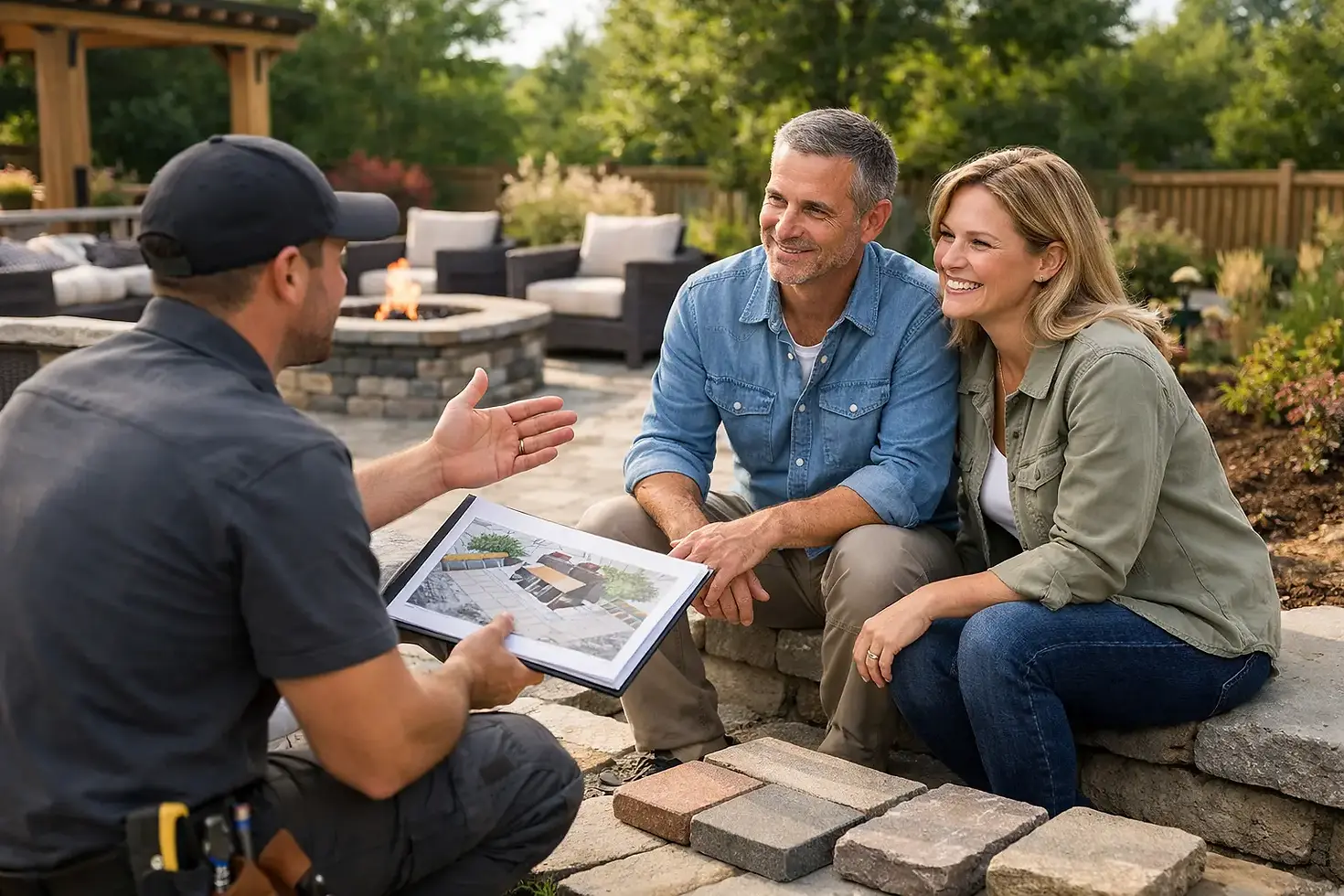
Ask to see material samples in your own yard when possible. Natural light can make a gray paver look cool and blue in one setting, then warm and soft in another. A contractor with a design-focused process can help narrow the options so the final choice supports the whole property rather than competing with it.
Look Beyond the Surface in a Quote
A clear quote should help you understand what is being built, not leave you guessing what may be added later. The scope should address demolition or removal where needed, excavation, base preparation, compaction, bedding material, pavers or slabs, cutting, edging, jointing material, cleanup, and any agreed-upon landscape restoration.
It is reasonable to compare quotes, but compare the scope as carefully as the price. One proposal may include the foundation work required for long-term performance, while another may appear less expensive because key steps are reduced or excluded. A patio that shifts, settles, or drains poorly can cost far more to correct than the initial savings.
Ask the contractor how they handle unexpected site conditions. Buried concrete, unsuitable soil, hidden roots, or drainage issues are not always visible during an initial visit. A professional should explain how change requests are communicated and approved, rather than treating surprises as vague open-ended costs.
Questions Worth Asking Before You Hire
The conversation should feel specific to your property. You are not simply buying square footage of stone. You are hiring a team to reshape a meaningful part of your home.
Before making a decision, ask about these practical points:
How will the patio be graded so water moves away from the home?
What base preparation and compaction process will be used for this site?
Which materials are recommended for the design, and why?
What is included in the written scope, and what could affect the final price?
What warranty information and post-project support are available?
You can also ask to see examples of completed work that resemble your project. Look for straight, consistent lines, clean cuts around curves and structures, balanced proportions, and smooth transitions at doors, steps, or pool areas. Finished project photos show design style, but they should also reflect attention to detail.
A Better Process Creates a Better Patio
A strong patio project has a clear rhythm. It starts with a site visit and a conversation about how you want the yard to function. From there, the contractor can develop a direction that considers size, materials, layout, drainage, and the relationship between the patio and other exterior features.
Once the design and scope are approved, the construction phase should be organized and transparent. Homeowners should know what to expect around site access, material delivery, work hours, and the general sequence of excavation, base installation, surface installation, and finishing. Good communication matters because your backyard is temporarily a worksite, but it is also your home.
At RM Modern Landscaping, patio projects are approached as outdoor living transformations, not isolated patches of hardscape. That perspective matters when a patio needs to connect naturally with a new fence, deck, pool coping, or a refreshed landscape plan. The goal is a space that feels intentional from every view.
Invest Where It Shows Every Day
A patio is one of the few home improvements you experience repeatedly, often without planning to. You notice it when you step outside with coffee, host a birthday dinner, watch children play, or sit out after the day cools down. That daily use is why layout and workmanship deserve more thought than a quick material selection.
The best time to make smart decisions is before construction begins. Bring your ideas, inspiration images, must-haves, and budget range to the first conversation. A capable contractor can turn those inputs into a patio that suits your property, supports your lifestyle, and gives your backyard a finished, inviting place to live in.


Comments